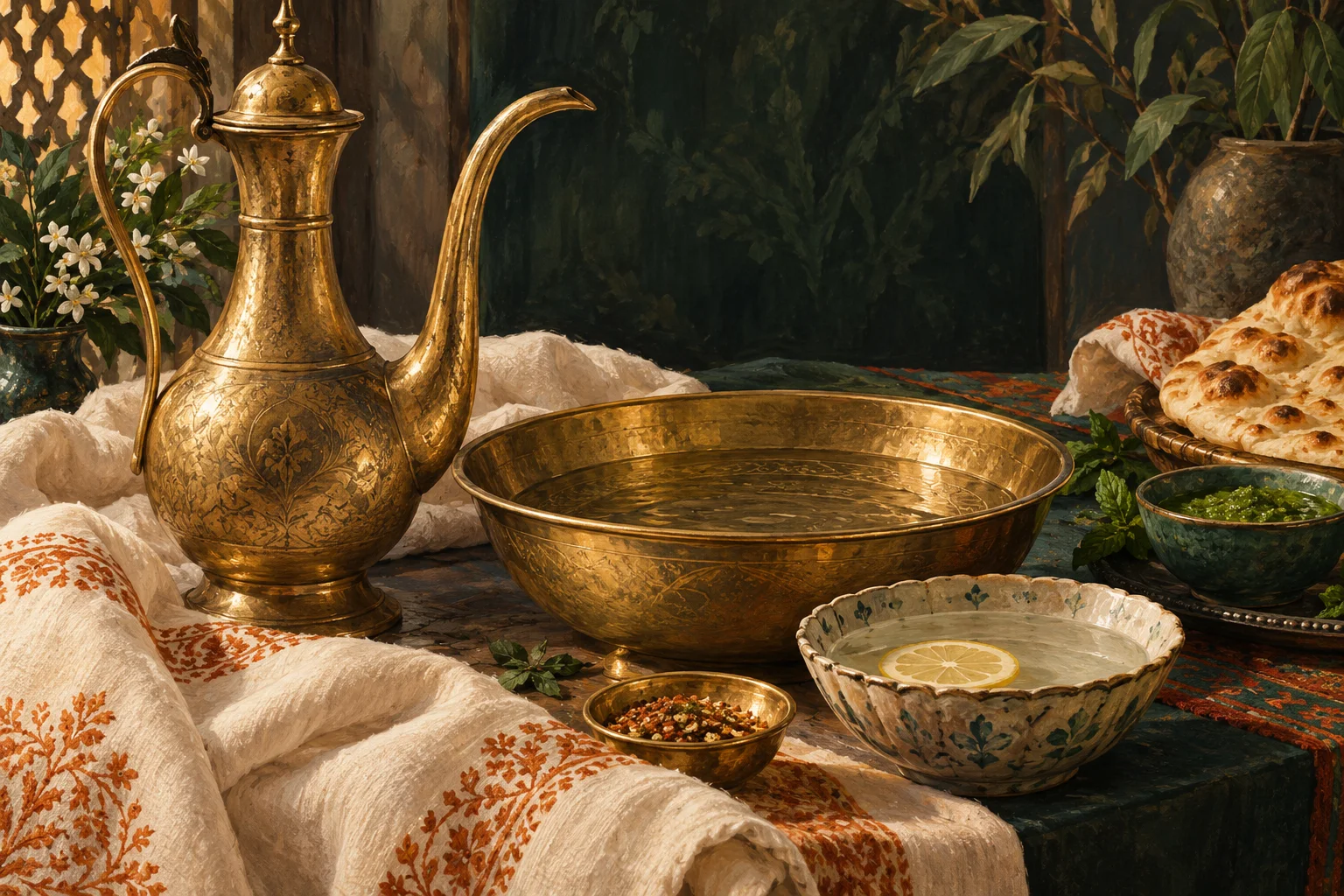
The best welcome begins before the first bite. Someone notices your empty glass. The bread is passed within reach. A question is answered before you have to ask it. You settle into your chair, and the meal feels generous already.
There is a beautiful word for this attention: mehman-nawazi. Rekhta records its Persian origin and its meaning of hospitality and care for a guest. At our imagined Bhaijaan’s table, that care is the starting point. Give someone a little ease, and you give conversation room to grow.
مِہمان نَوازی
A cloth, a meal, a place for you
Another lovely word is dastarkhwan. Its Persian roots lead to something wonderfully practical: a cloth on which food is laid, or one used to wrap bread. Rekhta’s entry keeps that everyday object at the centre of the word.
دَسْتَرخوان
Picture laying it out at home. Make space for the person who likes a little less chilli. Keep sauces easy to pass. Ask about dietary needs before cooking. Let each guest choose how much to eat. A generous host can offer seconds warmly and accept “I’m full” just as warmly.
Bring the care to the guest
The vocabulary of handwashing has its own charm. A chilamchi is a metal washing basin, sometimes fitted with a perforated cover. Rekhta marks this word as Turkish in origin—another small reminder of the many languages around the table.
چِلَمْچی
There is historical evidence for care around clean hands, too. The Western Australian Museum’s account reports the traveller Francisco Pelsaert’s observation that Muslims washed their hands before eating in the Mughal period. It is a glimpse of a dining practice, rather than proof of a particular lemon-water ritual.
For a dinner you host today, you might bring each willing guest a small finger bowl of comfortably warm water, perhaps with a slice of lemon, and a clean towel after the meal. Explain what it is, keep it easy to reach, and let people stay comfortably seated if they wish. The pleasure lies in that little thought: “You relax; I have brought it to you.” This is our contemporary hosting suggestion; the sources above do not establish lemon finger bowls as a Mughal invention.
Leave room for the people
Make the same space for attention. Put your phone aside when you can, without making anyone feel awkward for needing theirs. Ask who taught someone to cook, or which spice reminds them of home. Our digital-wellness notes offer more ways to give a meal a little breathing room.
The old kitchens have plenty to bring to that conversation. Visit Akbar’s table for names and ingredients recorded in the imperial household, then browse the royal cookbooks. Bring curiosity back with you. A memorable evening can begin with one good dish and someone saying, “Come, sit here.”