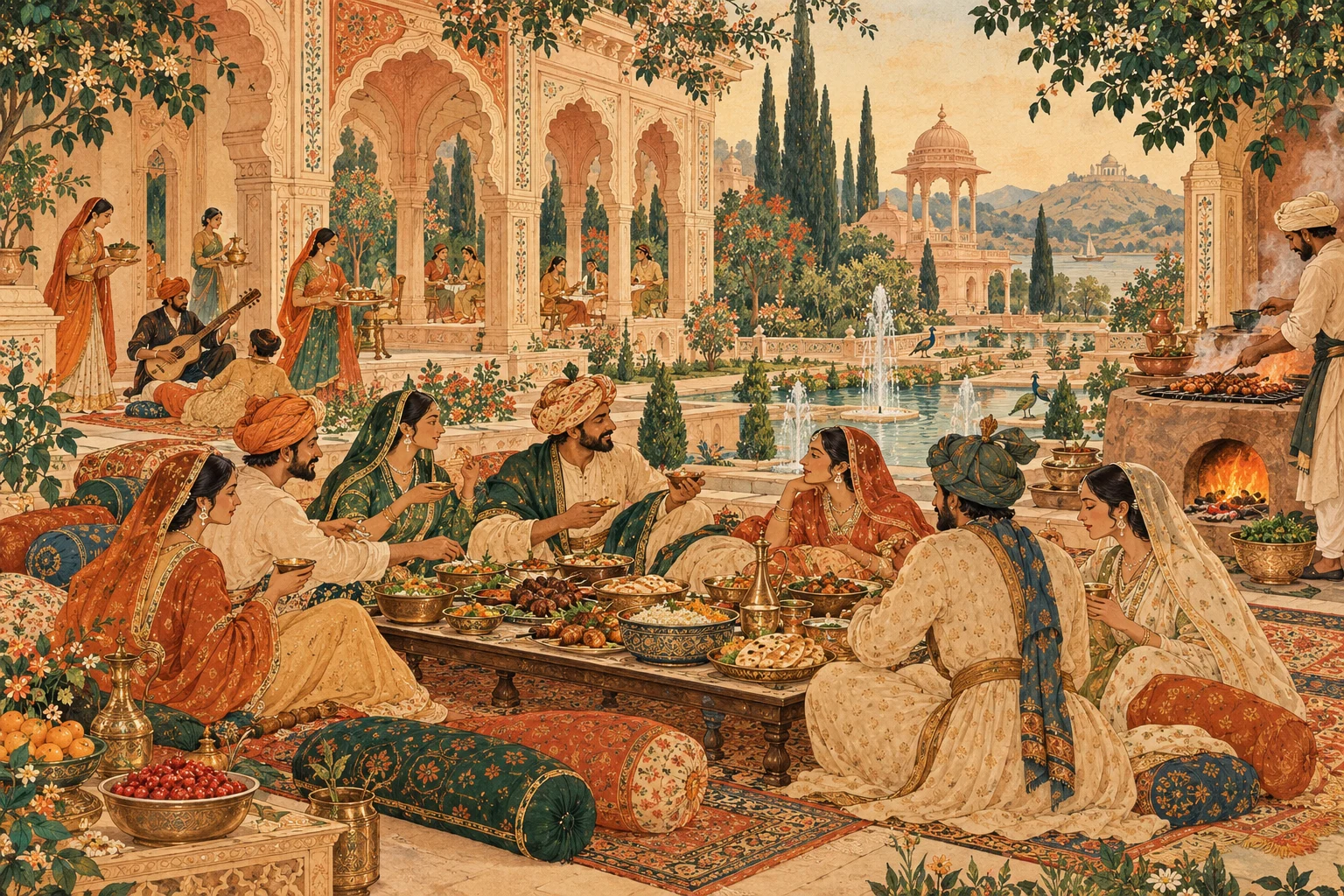
What might you notice first at a royal table? The gleam of a dish, perhaps, or the fragrance rising from rice. But open Abu’l Fazl’s Ain-i Akbari and another pleasure emerges: the names. Some sound wonderfully familiar; others make you want to lean closer and ask what is inside.
The people behind the feast
A’in 23 describes an organised imperial kitchen, with cooks, tasters, storekeepers and a writer. Its Mír Bakáwal is the Master of the Kitchen: a supervisory office, not a named inventor. Abu’l Fazl records cooks from different countries preparing grains, greens, meats and sweets. The picture is of a skilled team making abundance possible. Read the imperial kitchen chapter.
The next chapter arranges dishes into three groups: preparations without meat, combinations of meat with rice and other ingredients, and meat with spices. That structure is a useful invitation to look beyond the banquet centrepiece. Follow the whole spread, and the grain dishes become just as interesting as the richly seasoned meat. Each has its own place in the written account.
Eight names to savour
These portraits follow A’in 24’s historical ingredient lists. Read them as a little tasting journey through the record, beginning with rice and dal and ending with a fragrant pastry connection.
کِھچْڑی
K’hichri
Rice, split dal, ghee and salt: a remarkably short list among these courtly dishes. It is a lovely place to begin. A royal kitchen could make room for the pleasure of familiar ingredients as well as the elaborate flourish.
شُلَہ
Shullah
Meat, rice and gram meet ghee, onion, ginger and garlic, with pepper, cinnamon, cardamom and cloves. Read the list aloud and notice its layers: a substantial base, then a whole little gathering of aromatics. There is plenty here to imagine.
Harísah
Meat and crushed wheat form the centre, joined by ghee, salt and cinnamon. After Shullah’s longer spice list, this entry changes the rhythm. The written ingredients invite us to notice what a dish chooses to emphasise, as much as what it includes.
یَخْنی
Yakhní
The entry is beautifully spare: meat, onion and salt. Beside dishes scented with several spices, it offers a quieter reading experience. Pause here before moving on; the shortest ingredient list can be just as intriguing as the most lavish one.
قلیہ
Qalyah
Minced meat and a thick gravy are specified, with ghee, onion, pepper, cloves and cardamom. The text also acknowledges different preparations in Hindustan. Even within this single record, a dish has room for variation: a useful detail to carry into our own kitchens.
Malghúbah
Meat and curds appear in equal listed weights, with ghee, onion, ginger and cloves. Here the dairy ingredient takes a substantial role. It offers a striking point of comparison for anyone curious about the yoghurt-and-spice combinations they enjoy today.
Zard birinj
Rice dressed with sugarcandy and ghee, raisins, almonds and pistachios, with ginger, saffron and cinnamon. The ingredient list almost supplies its own sense of occasion. Imagine reading it while deciding what deserves pride of place at your next shared meal.
Quṭáb
Abu’l Fazl identifies this as sanbúsah in Hindustan. Meat, flour, ghee, onion and ginger sit alongside spices and sumac. The entry describes several ways of preparing it, leaving us with a deliciously suggestive bridge between a historical name and a familiar pastry family.
A table worth talking about
Try choosing the name that surprises you most, then compare its ingredients with the entry beside it. Where does cinnamon appear? Which dishes make space for curds? Those small connections turn a list into an absorbing conversation about flavour.
This is one rich part of the Mughlai culinary inheritance: grain beside meat, fragrant spices beside simpler preparations, cooks working together behind a generous spread. Follow the story into the royal cookbooks, or explore the warmth of mehman-nawazi. For us, the invitation is simple: learn a name, notice an ingredient, then pass the conversation around.